Airbnb House Rules: A Complete Guide for Hosts (+ Examples)
Learn how to set Airbnb house rules guests actually follow: what to include, example wording you can copy, and how to share rules guests read with Staysy.
Staysy Team
13 min read
On this page
Airbnb house rules are the expectations a host sets for guests during a stay, such as quiet hours, smoking, pets, parties, guest numbers, and check-in and checkout times. Clear, friendly house rules protect your home and your neighbors, prevent awkward conversations, and help guests relax because they know exactly what is expected. Staysy helps you share your house rules inside a digital guest guide that guests actually open, so your rules get read instead of skipped.
Whether you host a spare room on Airbnb or several homes across Vrbo and Booking.com, this guide covers how house rules work on Airbnb, the rules every host should set, example wording you can copy, and how to make sure guests follow them.
How house rules work on Airbnb
For reservations booked from November 20, 2026, Airbnb keeps everything you ask of guests in one “House rules and requests” section of the listing editor, under its Reasonable house rules and requests policy. It splits them into two types: house rules, which guests must follow, and requests, which guests are encouraged to follow. Both appear on your listing, so guests can see them before they confirm. Our post on Airbnb's new checkout rules covers the change in detail.
Standard house rules
Airbnb's seven standard house rules are:
- Maximum overnight guests
- Quiet hours
- Events
- Pets
- Smoking, including vaping and e-cigarettes
- Commercial photography and filming
- Lock up at checkout, with optional details on where to return keys
House rules are binding. Airbnb's own ground rules for guests ask them to follow your house rules, and if a guest breaks one, you can cancel the reservation without fees.
Requests
Requests are where anything specific to your home goes: trash and recycling, shared spaces, the hot tub, shoes off indoors, and your checkout tasks. They must be reasonable: nothing that takes significant time or effort, and nothing a cleaner would usually do. Keep them consistent with your standard rules, so if your quiet hours start at 10:00 PM, don’t write 11:00 PM in a request.
Where guests see your rules
Guests see your house rules on the listing page, in the booking terms, and later in the Trips tab of the Airbnb app. Most guests skim them once while booking, so the rules that matter most need repeating during the stay. We cover how to do that below.
10 house rules every Airbnb host should set
These ten cover what matters most for almost every short-term rental, in roughly the order guests will need them. Guest numbers, quiet hours, events, smoking and pets are Airbnb standard house rules; the rest are details and requests you write yourself.
1. Check-in and checkout times
Give a clear window for arrival and a firm checkout time, and say whether early check-in or late checkout is possible on request. Your cleaner's schedule depends on it.
2. Maximum number of guests
Only the guests on the booking should stay overnight. Say whether daytime visitors are welcome and, if so, how many. This protects your insurance, your neighbors, and your wear and tear.
3. Quiet hours
Set specific times, such as 10:00 PM to 8:00 AM, rather than “be respectful.” Numbers are easier to follow, especially in apartment buildings with shared walls.
4. No parties or events
Airbnb already prohibits disruptive gatherings, but saying it in your own words removes any doubt. If you allow small celebrations, such as a birthday dinner, say what is fine and what is not.
5. Smoking and vaping
State whether smoking, vaping, and e-cigarettes are allowed, and where. If smoking is fine on the balcony only, say so, and point to the ashtray.
6. Pets
Say whether pets are welcome, how many, and any limits, like no pets on the sofa or beds. Keep in mind that service animals are not pets, so a “no pets” rule does not apply to them.
7. Shared spaces and neighbors
If guests share a hallway, garden, pool, or laundry room, explain what they can use and when. A short note about neighbors, such as “please keep voices low on the stairs,” goes a long way.
8. Trash and recycling
Tell guests where the indoor bins are and what goes where. You can ask them to sort trash and recycling, but not to take it off the property. It is one of the most common complaints from neighbors, and one of the easiest to prevent.
9. Caring for the home
Cover the basics that protect your property: shoes off indoors, no moving furniture, use the cutting boards, and let you know about any breakage. Asking guests to report damage, without blame, gets you honest answers.
10. Checkout tasks
Keep it to the light requests Airbnb allows: used dishes in the sink, used towels gathered, trash and recycling sorted into the indoor bins, and the air conditioning off. Where to leave the keys belongs in the standard lock up at checkout rule. Anything a cleaner would normally do, such as washing dishes, stripping beds or starting laundry, is no longer allowed.
How to write house rules that guests follow
Guests are more likely to follow rules that read like a note from their host, so write them the way you would explain them in person. These five tips will help you get the tone and detail right.
Keep the list short
Aim for ten rules or fewer. Every extra rule makes the important ones easier to miss, so cut anything that is common sense or already covered by Airbnb's own ground rules.
Tell guests how to follow the rule
A rule only works if guests know what to do instead. If street parking is off limits, say where the guest space is. If the hot tub needs covering after use, say where the cover is and how it clips on. Pairing each rule with practical details saves a message and makes the rule easy to keep.
Explain the why
A short reason turns a rule into a request. “Please keep the windows closed when the AC is on, so it doesn’t freeze up” gets far more cooperation than “keep windows closed.”
Lead with what guests can do
Frame rules positively where you can. “Smoking is welcome on the balcony” feels very different from “no smoking indoors,” and it tells guests exactly where to go.
Keep the tone warm
Avoid capital letters, exclamation marks, and threats. Fines are off the table anyway: Airbnb doesn’t allow hosts to fine guests. Most guests want to look after your home, and a warm tone tells them you trust that they will.
Airbnb house rules examples you can copy
Write your house rules in your own voice, the way you would explain them at the door. Here are short examples you can adapt.
Example: quiet hours
“Our building is home to families, so quiet hours are 10:00 PM to 8:00 AM. Music and TV are fine, just keep the volume low after 10. Thank you for helping us stay good neighbors!”
Example: guests and visitors
“Only guests named on the booking can stay overnight. You are welcome to have up to two visitors during the day, until 9:00 PM. Parties and events are not allowed.”
Example: smoking and pets
“This is a non-smoking home, including vaping, but you are welcome to smoke on the balcony, where you will find an ashtray. Well-behaved dogs are welcome. Please keep them off the beds and sofa and use the towels in the hall closet for muddy paws.”
Example: trash and recycling
“Please sort trash and recycling into the kitchen bins: the green one for general waste, the blue one for recycling. We take care of the rest after you leave.”
Example: checkout
“Checkout is at 11:00 AM. Please put used dishes in the sink, gather used towels in the bathroom, and put the keys back in the lockbox when you lock up. That’s it. Thank you for looking after our home!”
How to make sure guests read your house rules
Writing good rules is half the job. The other half is putting them in front of guests at the moments they matter.
- Set them on Airbnb. Fill in your standard rules and requests under House rules and requests, so guests see them on the listing before they confirm. Rules added after booking, in messages, on signs in the home or in person, don’t count.
- Repeat the key ones before arrival. Include quiet hours, guest limits, and parking in your pre-arrival message, alongside the check-in details.
- Put them where guests look during the stay. Add them to your Airbnb welcome book. Guests open it again and again for WiFi, check-in steps and local tips, so rules placed there get read in context.
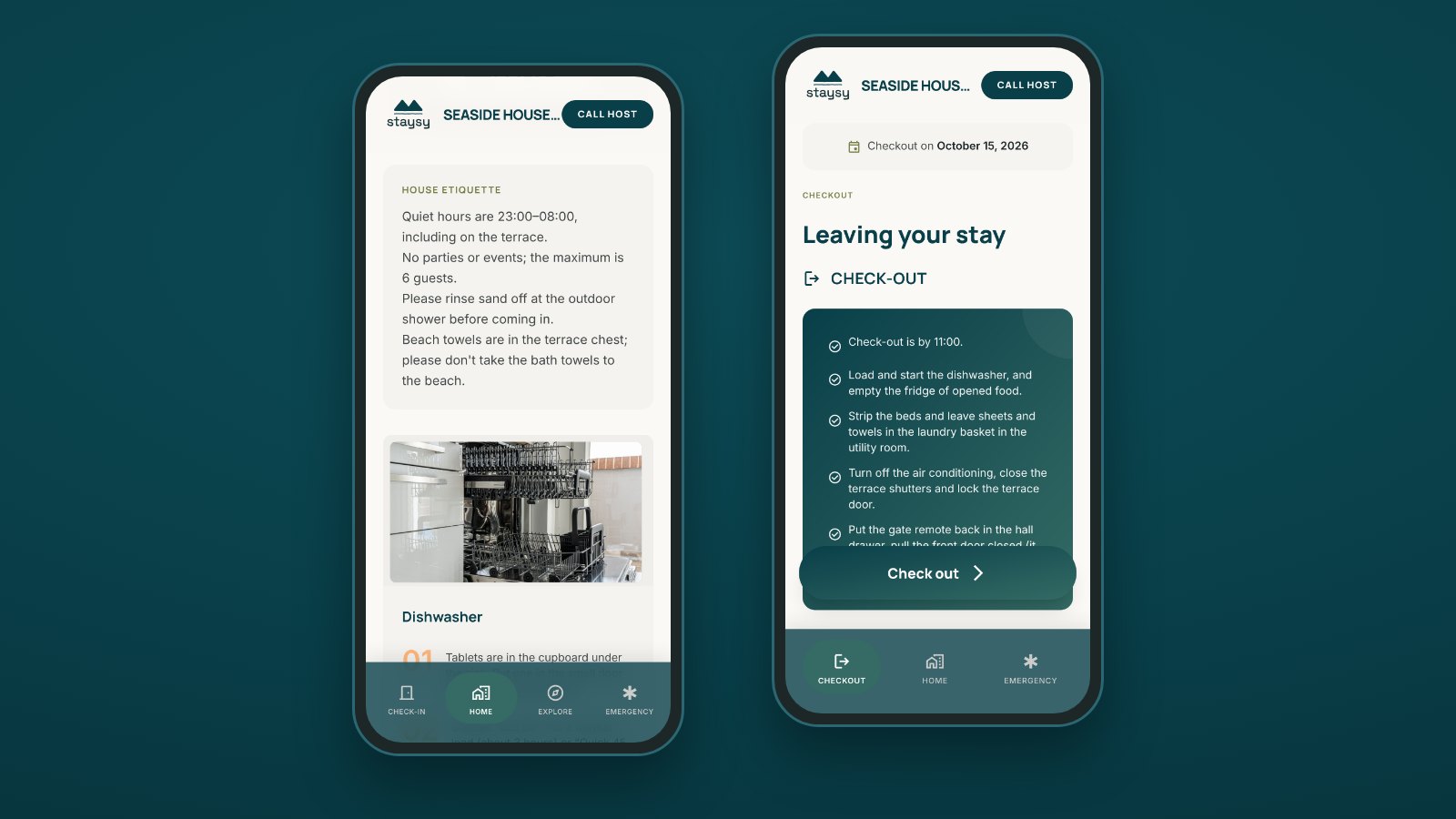
- Remind them on the last morning. A short checkout checklist the night before or on the final morning covers the rules that matter most at the end of a stay.
This is the heart of guest experience management: giving guests the right information at the right time, rather than everything at once.
What to do when a guest breaks a house rule
Most broken rules are honest mistakes, so start with a friendly message. Keep it calm, factual, and specific: “Hi Sam, a neighbor mentioned some noise after 11 last night. Just a reminder that quiet hours start at 10. Thanks so much!”
If a guest breaks a house rule, Airbnb’s policy lets you cancel the reservation without fees; a skipped request does not. If the problem continues or causes damage, keep a record of messages and photos, and contact Airbnb support through the app. Damage is handled through AirCover. Clear, specific rules on your listing make it much easier for Airbnb to help. After the stay, an honest, fair review helps other hosts too.
Local laws and house rules mistakes to avoid
House rules sit alongside local regulations and Airbnb's own policies, so check both before you publish.
- Local rules come first. Many cities and buildings set occupancy limits, noise rules, or registration requirements for short-term rentals. Make sure your house rules match them.
- Your rules cannot override Airbnb's policies. For example, Airbnb banned indoor security cameras from April 30, 2024. Outdoor cameras and noise monitors must be disclosed, and noise monitors may only be used in common spaces.
- Apply every rule to every guest. Rules that treat some guests differently from others can break Airbnb's nondiscrimination policy.
- No fines or penalties. Airbnb’s policy doesn’t allow hosts to fine guests or charge penalties for breaking rules, and Airbnb generally doesn’t allow hosts to collect reservation-related fees off the platform. Damage is handled through AirCover.
- Don’t add rules after booking. Rules sent in messages, posted on signs in the home or given in person don’t count, and you can’t restrict amenities you advertise. Put every rule on your listing.
- Keep rules consistent everywhere. If you also list on Vrbo or Booking.com, use the same rules on every platform and in your guest guide.
Share your house rules with Staysy
Staysy is an app-free digital guest guide built for short-term rentals. It works alongside Airbnb, Vrbo, Booking.com, or your own booking site, with no integration needed.
Rules guests read in the flow of the stay
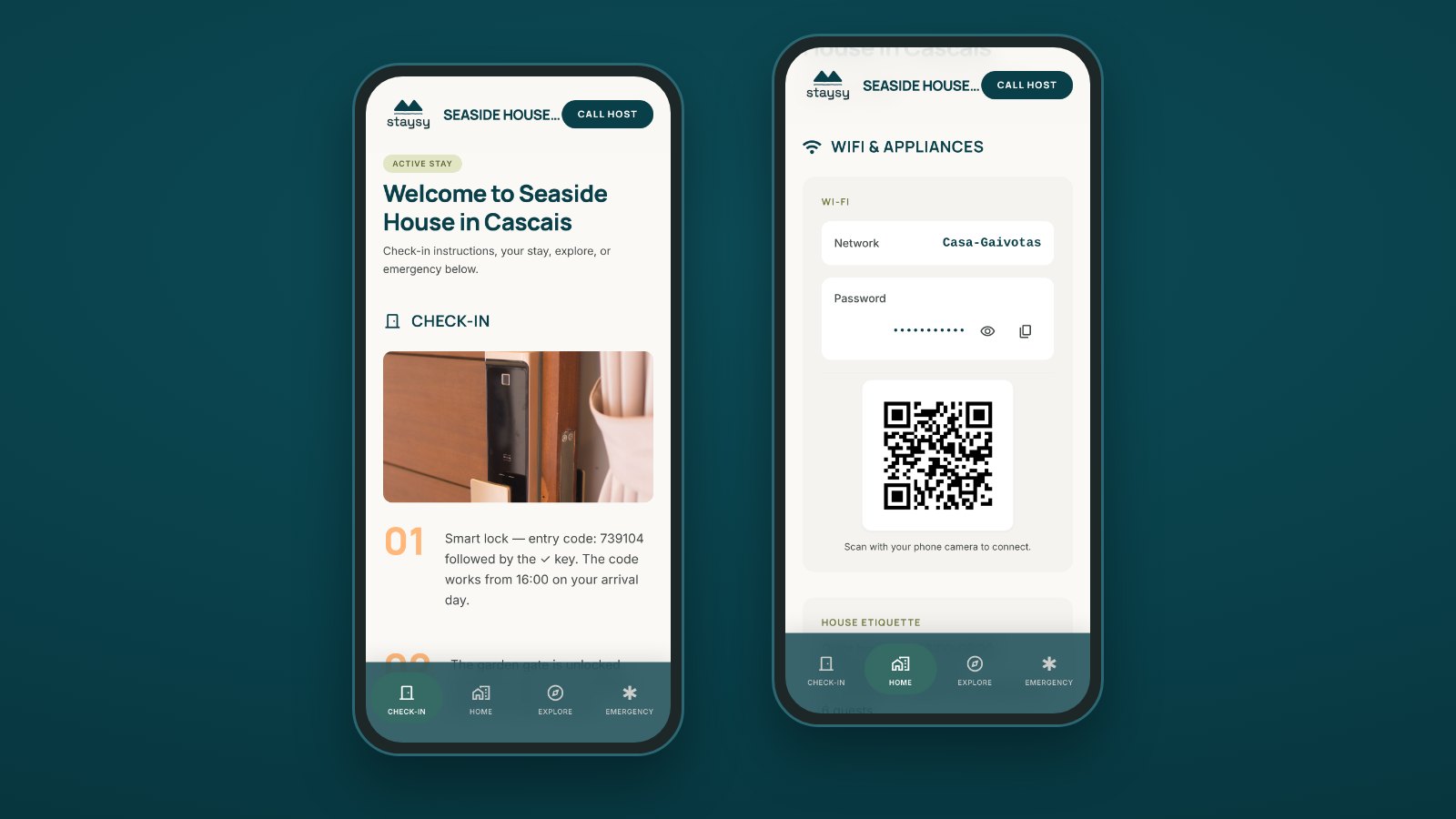
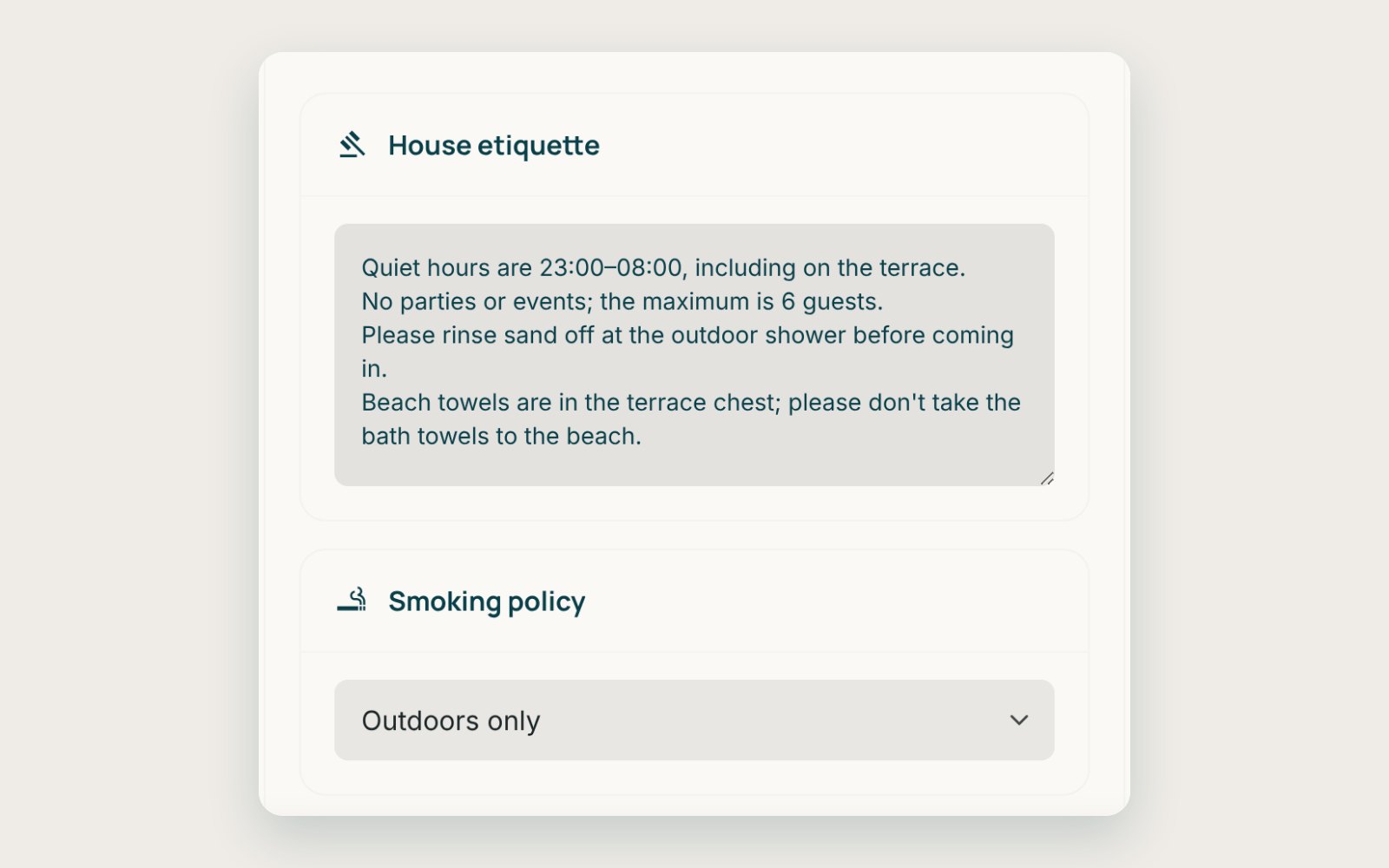
Add house rules to your guide, next to the check-in steps, WiFi, and local tips guests open every day. Each booking gets a unique, secure link, and guests open it in their browser, with no app to download and no account to create. See how house rules work on the Staysy features page.
The right rules at the right time
Guests can read the check-in steps as soon as they have the link. Your house rules and WiFi appear once they tap check-in on arrival day, and a checkout checklist appears on checkout day in the property's time zone, so your checkout rules arrive exactly when guests need them. Key details stay available offline, and guest screens switch to English, Spanish, or French automatically, so international guests understand your rules too.
One set of rules for every property
Write your house rules once. When you add another property, start from an existing one to copy its house rules and checkout tasks, then change only what differs, such as pets or parking. Switch optional sections on or off per property and edit a rule in seconds: changes save on their own, with no binder to reprint.
Frequently asked questions
What are Airbnb house rules?
Airbnb house rules are the expectations a host sets for guests, such as maximum overnight guests, quiet hours, events, pets, smoking and locking up at checkout. Hosts set them in the House rules and requests section of the listing editor, alongside requests: things they would like guests to do, such as checkout tasks.
What house rules should I have on Airbnb?
Most hosts should cover check-in and checkout times, maximum guests and visitors, quiet hours, parties and events, smoking and vaping, pets, shared spaces, trash and recycling, caring for the home, and a few light checkout requests.
Do guests have to follow Airbnb house rules?
Yes. House rules are binding, and if a guest breaks one, you can cancel the reservation without fees. Requests, such as checkout tasks, are only encouraged. If something goes wrong, contact Airbnb support through the app.
Can I charge a fine for breaking house rules?
No. Airbnb’s policy doesn’t allow hosts to fine guests or charge penalties for breaking rules. If a broken rule leads to damage, report it to Airbnb through the app, where it is handled through AirCover, and keep photos and messages as a record.
Where should I put my Airbnb house rules?
Set them on your Airbnb listing, repeat the key ones in your pre-arrival message, and add them to a digital guest guide or welcome book guests use during the stay. Staysy lets you share house rules in a digital guide for free, alongside check-in, WiFi and checkout steps.
Are house rules the same as a house manual?
No. House rules set what guests can and cannot do during the stay. A house manual, or welcome book, explains how the home works, such as WiFi, appliances and checkout steps. Many hosts include their house rules inside the house manual, so guests have everything in one place.
Getting started
Good house rules are short, specific and friendly, and they live where guests will see them. Staysy keeps your house rules, check-in steps and local tips in one link, so guests know what to expect and you answer fewer messages.